
What are the best alternatives to pawn shops for selling jewelry?

Pawn shops trade speed for margin. If you want a fairer read on inherited gold, a diamond ring, or broken chains before you commit, alternatives to pawn shops for selling jewelry include local jewelers, online specialist buyers, auctions, consignment, and peer marketplaces. Each path optimizes for different goals: same-day cash, transparency, or maximum resale on luxury pieces.
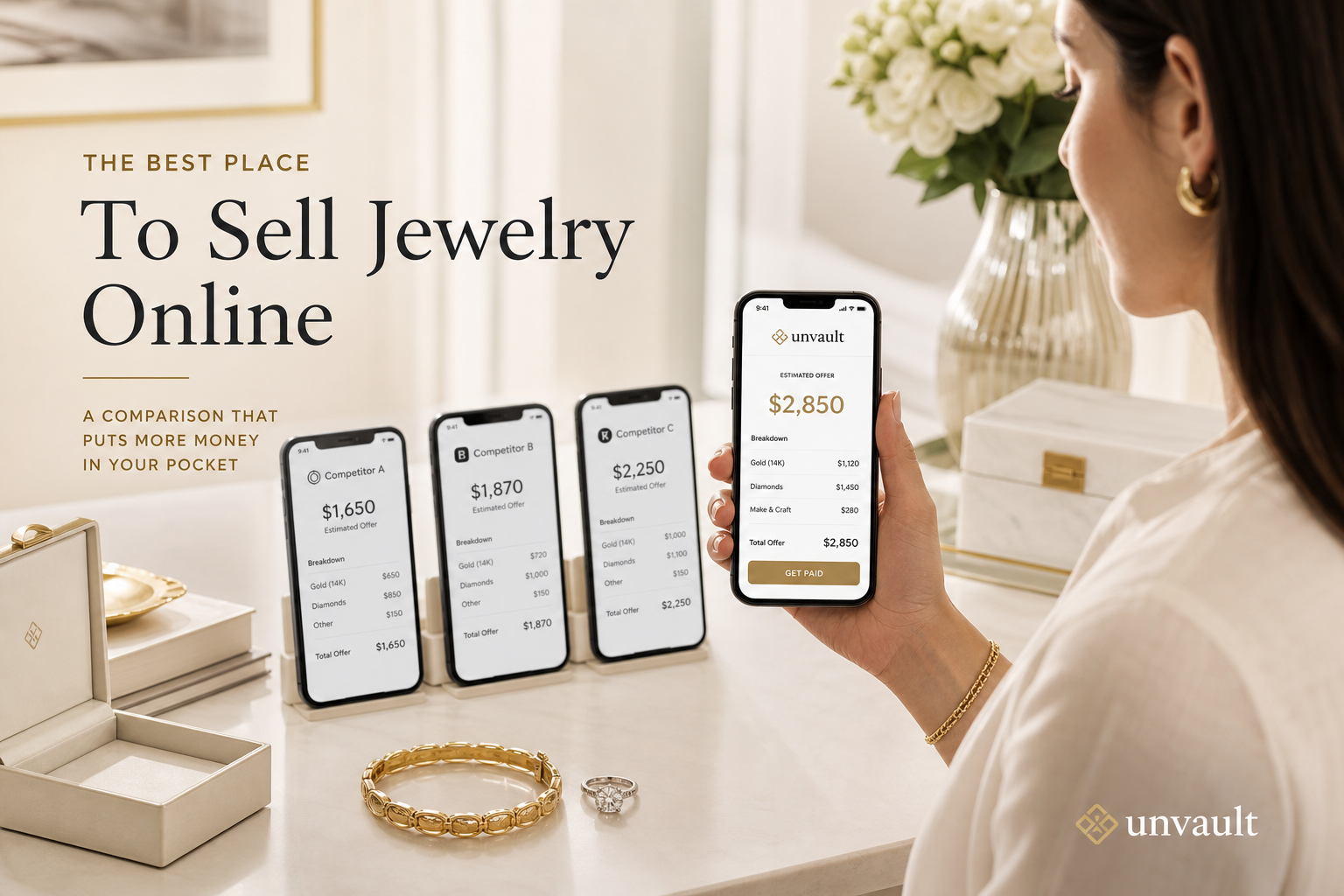
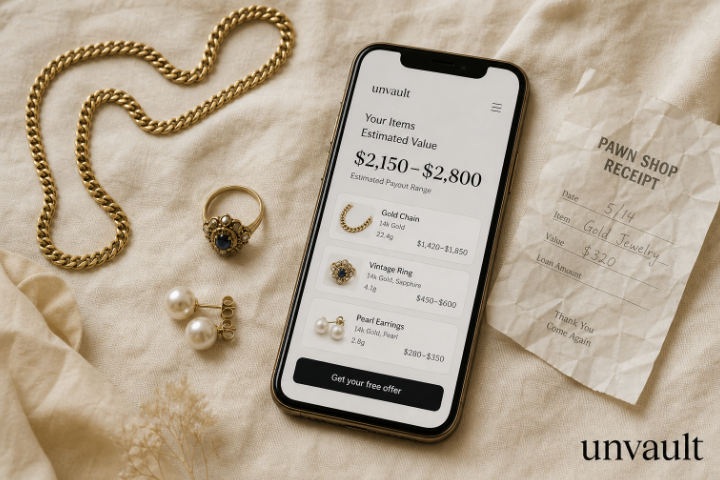 Unvault is built for sellers who want a free photo estimate first and optional selling later. That model fits estate jewelry especially well, when you need clarity before an emotional decision.
Why look beyond a pawn shop in the first place?
Pawn shops optimize for quick flips. Offers reflect melt value, local demand, and the shop's need to resell fast. That works when you need cash today and the piece has low sentimental value. It hurts when you inherited jewelry, own designer pieces, or simply never saw an itemized breakdown of metal, stones, and fees.
APMEX's selling guide notes pawn and cash-for-gold counters prioritize speed but often pay less because buyers build in margin and negotiation room. Getting a second opinion before you accept a counter offer is one of the simplest ways to avoid leaving money on the table.
What are the main alternatives to pawn shops?
The five paths most sellers consider are local jewelers, online specialist buyers, auction platforms, consignment houses, and peer marketplaces. None guarantees a specific price. Each differs on speed, fees, and how much work you do yourself.
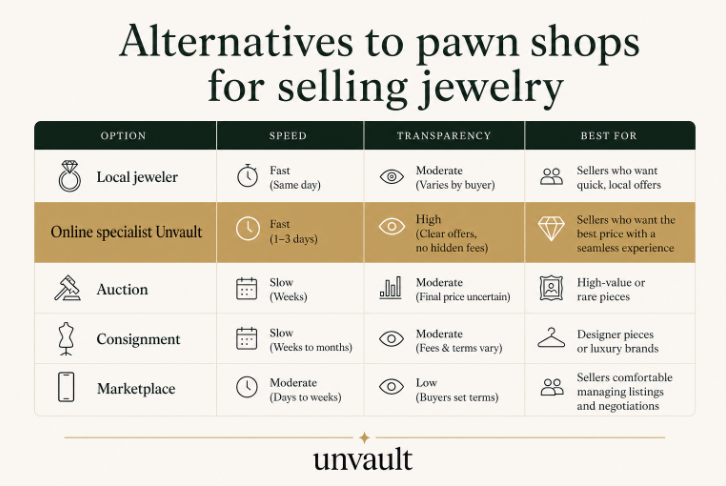 Local jeweler fits wearable pieces and designer marks, but you have to go in person and offers can vary a lot from store to store.
Online specialist (Unvault) works well for inherited gold and transparent estimates; the main tradeoff is a shipping step if you decide to sell.
Auction (Worthy) suits high-value diamonds and stones around 1 carat and up, but expect a 14–18 day process and percentage fees.
Consignment (The RealReal) is a strong fit for luxury brands with authentication, though commissions are high and a sale is not guaranteed.
Marketplace (eBay) can work for vintage, collectible pieces and patient sellers, but you take on listing work and buyer risk yourself.
Is an online specialist buyer a good pawn shop alternative?
Yes, for sellers who want pricing logic before they ship anything. Platforms like Unvault start with a free online estimate: upload photos, receive an itemized breakdown of metal, stones, and market factors, then decide whether to sell. Selling is optional. There is no counter-pressure like a pawn shop floor.
Unvault reports 30,000+ valuations completed and more than $20M in jewelry value tracked on its platform. Fees are disclosed on How it works before you commit. Final offers can change after authentication if weight or grades differ from photos. That is normal across the industry, not a Unvault-specific surprise.
This path suits inherited jewelry, broken gold, single earrings, and anyone comparing a pawn quote to something more transparent. For a deeper walkthrough, see our guide on how to sell inherited jewelry.
When should you try a local jeweler instead?
Local jewelers make sense when the piece might sell as jewelry, not scrap. Signed vintage, intact bridal sets, and wearable designer items can command premiums a pawn broker will not pay. A jeweler can inspect maker's marks, stone settings, and retail demand in your area.
The tradeoff is geography and consistency. One store's offer may differ from another's on the same day. Jewelers also need in-person visits, which can feel rushed if you are still grieving an estate. A practical approach: get an online estimate at home, then bring that range to one or two jewelers as a benchmark.
How do auction platforms compare to pawn shops?
Auction platforms like Worthy connect your jewelry to professional buyers who bid against each other. That can lift prices on high-value diamonds and watches. Worthy publishes tiered fees from about 10% to 18% depending on sale price, and the process typically runs 14 to 18 business days after your item arrives.
Auctions work best when the piece justifies grading, photography, and waiting. They are usually overkill for a thin gold chain or a single broken hoop. Pawn shops win on minutes. Auctions win on competitive bidding for stones buyers actively want.
What about consignment for luxury jewelry?
Consignment through houses like The RealReal handles authentication, photography, and buyer marketing for brands such as Cartier, Tiffany, and Van Cleef. You may reach luxury shoppers pawn brokers never see. Commissions are substantial and timelines stretch weeks or months. Payment arrives only if the item sells.
Consignment fits museum-quality or clearly branded luxury. For mixed estate boxes with plain gold and unknown stones, a valuation-first platform or local jeweler is usually faster and less uncertain.
Can you sell jewelry yourself on a marketplace?
eBay, Facebook Marketplace, and similar platforms let you set the price and keep control. Collectors hunt vintage pieces there, and fees can beat pawn margins on the right listing. You also handle photos, messages, shipping, returns, and fraud risk yourself.
Marketplaces reward patience and experience. They are a weak fit for scrap gold lots or sellers who want one insured shipment and a single offer. Many sellers use a specialist estimate first, then list only if the piece is clearly worth the extra effort.
Which alternative fits inherited jewelry?
Inherited pieces need space to breathe. You may be dividing assets with family, updating insurance, or deciding what to keep. Pawn counters rarely match that pace. An online estimate lets you document value for estate planning without handing the ring over the same afternoon.
If you are working through an estate, start with our post on free appraisal for jewelry online, then compare any pawn quote against that range. Appraisal is not a promise to buy at that exact number after inspection.
How do you compare offers fairly across options?
Gather two or three quotes when you can. Note whether each offer is itemized or a single opaque number. Ask what happens if you decline. Confirm insurance for any shipment. Check reviews on independent sites, not only testimonials on the buyer's homepage.
Write down karat marks, stone notes, and any GIA paperwork before you visit anyone. Documentation rarely hurts and sometimes adds real value. No path guarantees a specific payout. Comparison shopping is how you learn what is reasonable for your item today.
FAQ
Are online jewelry buyers safer than pawn shops?
Both can be safe when you use insured shipping, documented handoffs, and readable contracts. Pawn shops are regulated locally and pay on the spot. Online buyers add tracking and authentication video in many cases. Read each platform's FAQs before you ship.
What is the fastest pawn shop alternative?
Pawn shops still win on minutes. Among alternatives, mail-in buyers like Bivvy advertise quotes within about 24 hours after receipt. Auctions take longer. Marketplaces depend on how fast a buyer appears.
Do alternatives pay more than pawn shops?
Often yes for jewelry with resale demand beyond melt, but not always. Pawn offers embed profit in a low number. Online specialists and jewelers can reach broader buyers. Your result still depends on metal weight, stones, brand, and daily spot prices.
Can I get an estimate without selling?
Yes. Unvault and several competitors offer free valuations with no obligation to sell. That alone can be enough for insurance updates or family conversations. Selling remains your choice.
What should I bring to a local jeweler?
Bring the jewelry, photo ID, and any certificates, receipts, or original boxes. Note metal stamps and stone details you already know. Compare their offer to an online estimate you got at home.
Is a pawn shop ever the right choice?
Yes, when you need same-day cash, the piece is low sentiment, and you already checked spot gold so the offer does not surprise you. Even then, one online estimate takes about 60 seconds and costs nothing.
Ready to compare before you walk into a shop? Get a free Unvault estimate. More guides on the Unvault blog.
Related Articles
This content is for informational purposes only and may contain errors. Please contact us to verify important details.